



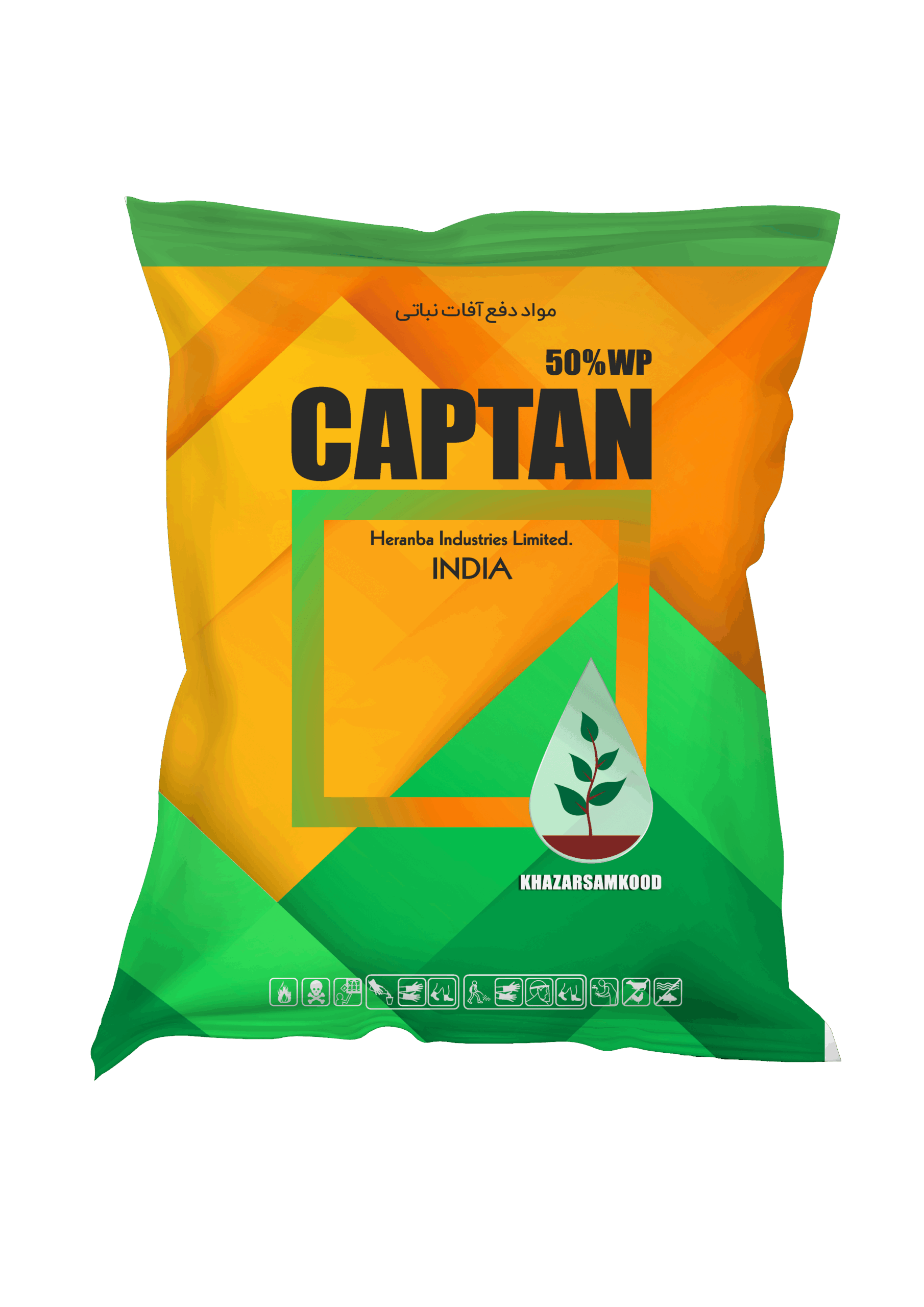
| Pesticide class | Fungicides |
|---|---|
| Active ingredient | Captan |
| Formulation | 50%WP |
| Resistance group | FRAC:M4 |
| PHI | 10day |
| Acute Oral LD 50 for Rats | 9000mg/kg |
Captan 50% WP
It is a non-systemic fungicide with protective and curative action. It belongs to the class of phthalimide which reduces the synthesis of amino compounds in pathogenic fungi and prevents the activities of phosphorus metabolism treatment enzymes such as oxidases, hydrogenases and coenzyme A.
Additional information
Target and Dosage
Target and Dosage
| Crop | Disease | Dosage (Per Lit water) |
| Peach | (Taphrina deformans) | 3-3.5/1000 |
| Apple | (Venturia inaequalis) | 3/1000 |
| chickpea | (Fusarium oxysorum) | 2/1000 |
| Grape | (Plasmopara viticola) | 3/1000 |
| Fruit tree | (Wilsonomyces carpophilus- Stigmina carpophila) | 3/1000 |
| Trees | (Fusarium oxysporum) | 7.5-10g/m2 to a soil depth of 10 cm |
Related products


Iprodione + Carbendazim 52.5% WP
It is a systemic and contact fungicide with protective and curative with a broad-spectrum action. It belongs to the dicarboximide and benzimidazole. The point of impact of Iprodione, Affects inhibits fungal spore germination and mycelial growth and for Carbendazim is inhibits beta-tubulin synthesis and disruption in mitosis division.
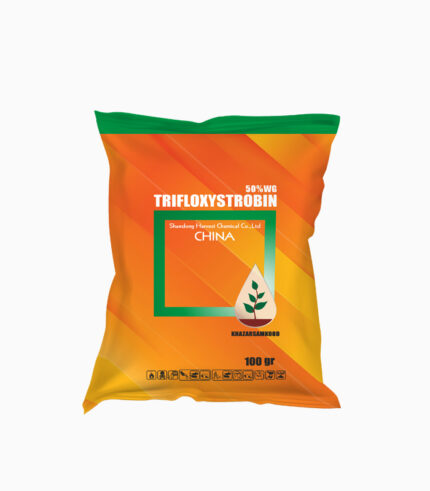
Trifloxystrobin 50% WG
It is a mesostemic (semi-systemic) fungicide with protective and curative action. It belongs to the oximinoacetate. The mode of action of Trifloxystrobin results in the inhibition of respiration in the mitochondria of target fungi. It interrupts electron flow by acting at the Qo center on cytochrome bc1 in the respiratory chain.
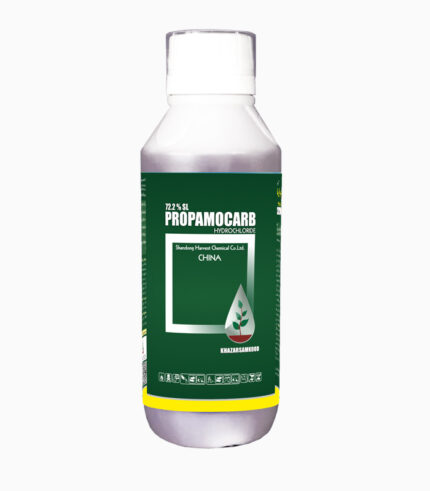
Propamocarb hydrochloride 72.2% SL
It is a systemic fungicide with protective and curative action. It belongs to the class of carbamate. It acts by changing the permeability of the cell membrane and disrupting the biosynthesis of phospholipids and fatty acids. Propamocarb hydrochloride does not have much effect on sandy and poor soils.

Dodine 65% WP
It is a systemic, preventive, and curative action. It belongs to the guanidine family, which disrupts the cellular respiration of the pathogen by changing the integrity and permeability of the cell membrane. The mode of action of this fungicide is due to the presence of guanidine, which non-specifically disrupts the structure of the membrane. The lipophilic part of Dodine binds to the lipid part and its polar part to the phosphate group of the phospholipid, causing structural disruption, membrane permeability change, nutrient absorption disruption, and respiratory inhibition.
Reviews
There are no reviews yet.